
From Fire to Ice:
The Infinite Complexity of Emotion
For the actor, the challenge of emotion involves not only its free release, but also the avoidance of the "one-note" audition or performance. As Stanislavski put it, actors should not only be able to convey every emotion, but "every barely perceptible shade of an emotion."
That ability separates mediocre or even good actors from great ones!
That ability separates mediocre or even good actors from great ones!
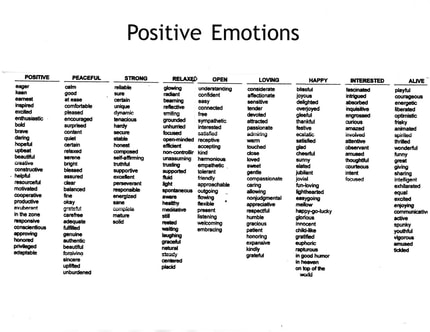
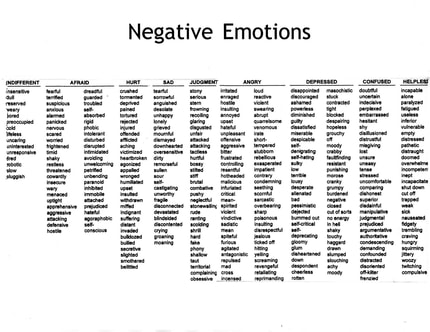
Just glance at the lists below. Overwhelming , right? They indicate the incredible range, and subtlety of human emotion. Some may, at first glance, seem the same: "beg" and "plead", for instance. Yet, they need not be. If the mind conceives of a difference, however small, it will accept it. "Beg" may be seen as more physical, stooping and groveling. "Plead" may be more verbal, a lesser humiliation for the character.
|
|
How to use the lists:
More than a bit overwhelming, right? Well, don't even try to read or memorize or use all or, even a lot of them. The small font is to prevent that. Instead, for every audition scene or monologue you prepare, think of ten, possible emotions. Yes, 10. Don't memorize your 10 either. Just write them on blank side of your scene or monologue. Then relax and read the list slowly. Your unconscious will grab on, and use them as you perform, BUT only if you don't try to memorize and attach them to specific lines.